The first sessions of the newly constituted parliament, rather than bringing the expected easing of tensions, have produced sharp polarisation, the denial of deputy speaker positions to the opposition, and speculation about the possible discontinuation of live television broadcasts. The new ruling majority, which emerged from student and civic protests, is announcing a fundamental restructuring of society. The public, meanwhile, is asking whether we are witnessing a democratic step forward or an entirely different kind of experiment.
27 November 2026
Editor's note
Kosovo does not come up once in the interview below. This publication is running it in full because its subject is who decides in Belgrade, and Kosovo has to deal with whoever that is.
For a month this publication has reported what Serbia's new majority says about Kosovo, while Brussels and Berlin congratulated the winners. Here a Belgrade professor describes how that majority behaves at home. The interview starts from what NIN reports of the first two sessions of the new parliament: the opposition left without a single deputy speaker's seat, and talk that live broadcasts of the sessions may end. He adds the arrests of officials of the former system and decisions that, by his account, are still taken in plenums nobody elected, while the people on the winning list fight in public over who leads.
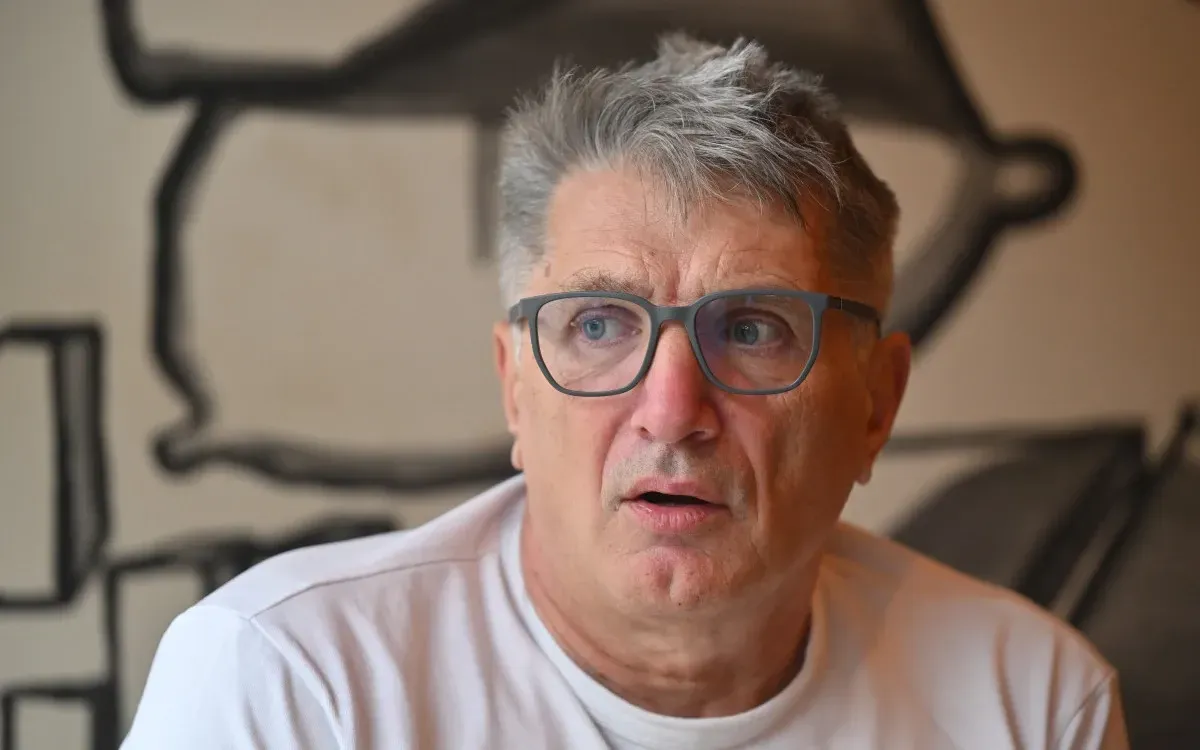
Vladimir Vuletić is not a neutral witness, and readers should know it. He teaches sociology at the University of Belgrade, chaired the board of Serbia's public broadcaster RTS, and was for years a prominent public defender of Aleksandar Vučić's government. He welcomed Vučić's planned Movement for the People and State as a way to expose those in Serbia who quietly favour Kosovo's independence. In this interview the furthest he goes on the system he defended is that it "was not ideal". This publication does not share his view of that system, or of Kosovo.
His question stands whoever asks it. A government in which, as he puts it, it is not known who makes the decisions and who bears responsibility cannot be held to anything it agrees. Pristina, and those in Brussels who want Pristina back at the table, should read him with that in mind.
Based on the first two sessions of the newly constituted parliament, do you have a clearer idea of what Serbia actually chose in these elections?
I cannot say exactly what Serbia chose, but I can say with certainty what kind of signal has been sent. The fact that the opposition has not been given a single deputy speaker position in parliament is an extremely bad signal for democracy in Serbia. It is a precedent and a clear message that the new majority will treat the opposition in a manner inconsistent with the basic tenets of parliamentarism.
Does this look like backsliding to you, or is there hope that the new actors will learn parliamentary manners along the way?
The good thing is that the elections ended peacefully. The manner in which Aleksandar Vučić accepted defeat and congratulated the winner seemed like a good prelude to easing the deep tensions in society. However, we now see that the new authorities in fact had neither the intention nor the idea of easing tensions; the tensions have simply carried on at another level. When you have a situation like this, where there are effectively two large blocs, one in the majority and one in the minority but very strong, it could have been an extraordinary opportunity and a healthy position for future parliamentary life. What has now been done shows that the ruling majority will behave as though it were alone in the Assembly and will take no account whatsoever of anything coming from the opposition benches.
In public this is explained with the argument that these are people who are, allegedly, steeped in crime and corruption.
You can accuse anyone of anything, but until it is proven in court, you cannot suspend democratic rules on the basis of mere accusations. That would not pass anywhere in democratic public life. Such behaviour is, in any case, a path towards the abolition of parliamentarism.
The main justification for what we are discussing is that the previous government was exactly the same and is now being given a taste of its own medicine.
Fine, but even in that system, which was not ideal, there was a practice of respecting elementary parliamentary procedures concerning deputy speaker positions and parliamentary committees.
The big question now is whether the opposition will be given even a single committee chairmanship. I do not want to prejudge, but this must not go unnoticed. Once you take a step in the wrong direction, all the other moves follow that path by inertia.
Parliament is a place where people argue fiercely, that is its nature, but there are clear lines that are not crossed. When they are crossed, the way is opened to the complete destruction of political pluralism.
In these first sessions, do you see a different kind of media spectacle from what we have watched over previous decades?
No, spectacle has always been an integral part of our parliamentarism. What is different, and what is fundamentally important, is the performance of the head of the ruling coalition's parliamentary group. That performance caused strong polarisation in the public, which was indeed the intention. Behind that smokescreen, however, lies a much more important process: I would say it was a way of asserting the leading role in the movement. It is perfectly clear that this kind of student story, without a clearly defined leader, will not be able to survive in this form in the long run.
How do you explain the phenomenon of a leaderless movement coming to power at all?
Such a model has never existed, not only in Serbia but anywhere in the world, and for a very simple reason: it runs contrary to the basic laws of politics. More than a century ago the sociologist Robert Michels formulated the "iron law of oligarchy", showing that however democratic and horizontal an organisation or movement may be at the outset, over time a narrow group of people, or an individual, inevitably forms to run it. That will without doubt happen to this movement too. We are currently witnessing that struggle for supremacy. Some of those battles are fought behind the scenes, and some, as we saw with the head of the parliamentary group, entirely in public, in order to take up a starting position. That performance [by Jovo Bakić] in parliament was an attempt to impose himself as leader. I am certain that the struggle for the leader's place will be the main political topic in the months ahead.
Is it at least a little clearer to you today who will actually run state policy: the MPs, as the formal holders of the mandates, or an informal entity, the plenum?
That is exactly what I am talking about: a battle is under way over who will make the decisions. For now the impression is that the plenums still have the say, that they determined who would be where, but that cannot last forever. In running a state you have to take hard and fast decisions every day. There are serious differences of view within the plenums themselves, just as there are differences among the people on the list itself.
Such a system can end in one of two ways: either in complete deadlock and the collapse of the system, or with someone imposing himself, becoming a clearly defined leader and taking real power and responsibility. If the illusion continues that decisions are made by some invisible plenums, we will very quickly arrive at endless wrangling that will paralyse the work of both parliament and government. The only halfway meaningful role for the plenums would be to act as a check on the legality of the new authorities' work.
What does political theory tell us about such attempts at direct, faceless democracy?
There is no need to reinvent the wheel with two thousand years of humanity's political experience behind us. The idea is at bottom a utopia, we might even say a positive utopia, driven by good intentions, but great writers such as Orwell or Kafka described long ago where such utopias lead.
Rule that has no face, in which it is not known who makes the decisions and who bears responsibility, is extremely dangerous. It is just as dangerous as having an authoritarian personality at the head of a movement, and more dangerous still, because there is no personal responsibility. Beyond that, there is another deep, structural problem with this list: whom does it actually represent? In essence it represents the middle class. It is a movement of the middle class. In sociological theory and practice, the middle class is the one that stabilises society precisely because it sits in the middle, between the ruling class and the working class, that is, the poor. The moment the middle class tries to become the ruling class itself, you no longer have a middle class as a buffer zone. And the rule of the middle class easily turns into a kind of dictatorship.
Why do you think so?
Because that is its inner logic once it takes absolute power. What form that dictatorship will take matters less at this moment: whether it will be a dictatorship of invisible bodies and plenums behind which, again, some narrow clique is hiding, or whether someone with a first and last name will appear and impose himself as leader. It also matters for our political mentality that throughout our history we have always had strong leaders and are not used to functioning without a clear authority.
The other scenario, which at present seems very likely to me, is that we will get an arrogant government that will not care much for institutional constraints and will seek to marginalise all other actors completely.
On the other side, we have the Serbian Progressive Party as the only coherent opposition force in parliament at this moment. How do you see its future in an atmosphere in which arrests and a settling of scores with the former government are openly announced?
That kind of pressure and discrimination can, in the short term, unify and strengthen the party. In the longer term, however, it raises serious questions. It is entirely certain, and it is already being announced, that numerous affairs will be opened and that there will be heavy blows against the very top of the party.
I cannot at present assess precisely what the internal cohesion of the Serbian Progressive Party is like, but if we draw a historical parallel with the Socialist Party of Serbia after 2000, we will see an interesting pattern. A fierce demonisation of the SPS was carried out then, they were completely cast out, yet they survived and stayed on the political scene. Admittedly, they had no leader in the country at the time, whereas the Progressives at this moment still have one. I say "still" because the possibility of his arrest is being talked about ever more loudly in public.
What would happen to the party if its leader really were arrested or removed from the political scene?
It would have been an entirely different situation had Slobodan Milošević stayed in Serbia at the time, but if the leader of the Progressives is in some way removed for a certain period, that would without doubt weaken the party considerably. The question would open at once of who is the formal successor and who the real one. We already see people from the former system being arrested, such as the principal of the Jovan Jovanović Zmaj Grammar School [in Novi Sad], Dean Drid and other officials. As I said, at first that may close the ranks, but depending on how long the process lasts and how deep it goes, it may seriously shake the party.
How would international actors react to such a scenario of mass arrests of opposition leaders?
As far as international actors are concerned, it would be extremely bad to start making arrests without firm, irrefutable evidence. Arresting people solely on the basis of political accusations and only then looking for evidence while they are in detention is a scenario that would be ruinous for the situation inside the country. I am not sure the world would look kindly on it either. But that also depends on how far the new policy is aligned with the various centres of international power.
Part of the academic community is taking a radical line, advocating lustration, bans and a harsh settling of scores with the former government. You know these people. Does that surprise you?
It does not surprise me, because I know how the academic mind works when it finds itself in a position of power. It is one thing to be in opposition and criticise the system, and quite another to come to power. Then a specific uniformity of thought rises to the surface. That uniformity of thought was present at the university before as well, but it was not so dangerous because it had no levers with which to shape social currents directly. When I speak of that uniformity of thought, I mean a radical, exclusionary view of reality. Intellectuals should, in my opinion, interpret reality and examine its dimensions that are invisible to the naked eye, but within the academic community there is always a revolutionary wing which holds that it is not enough merely to interpret the world, but that one must also run it.
The worst thing for a society is when intellectuals take direct power. At that moment they lose their critical distance and stop seeing reality as it is, and instead try to force it into their ideological and theoretical moulds. They want to "fix" society, which in translation means reshaping it to their own measure. That is why the rule of intellectuals and the middle class tends, sooner or later, to end in some kind of dictatorship.
Where is that exclusionary attitude most clearly seen?
It can be seen, for instance, in the attitude towards certain media, such as Informer. Whatever anyone may think of that outlet's editorial policy, the fact is that it is an outlet through which the voice of a large section of citizens is heard, people who do not belong to the middle class and whose way of thinking and speaking does not fit the standards of the cultural elite.
There is now an ambition to declare these people, who differ in education, material status or taste, the "diseased part of society" and simply to erase them from the public sphere. It does not work that way. All dictatorships in history have rested on the idea that society has "healthy" tissue and "diseased" tissue that must be removed. For years everyone invoked the academic community as a bastion of freedom of thought, yet in that same community today there is not a trace of tolerance for a different view. The university has become the gathering place of a closed, privileged group in which nepotism and social connections reign, and which people of lower social origin find hard to enter. Fortunately, this is a narrower group that has monopolised the running of the university. Now that closed group wants to arrange the whole of society in its own image. You can rule by force for a while, but not for long.
The possibility of ending live television broadcasts of Assembly sessions is being mentioned in public. What would such a move mean for an already fragile democracy?
It would be a complete catastrophe. Television broadcasts of the Assembly are an achievement we barely won back in the nineties. Ending the broadcasts would be another big step in the direction I have been talking about: ruling behind closed doors, with nobody seeing what happens in parliament, and imposing your will without any public insight and without any chance for the voice of the opposition to be heard. It is a model we have already seen at the local level, for example in the Assembly of Vojvodina, where the opposition was completely excluded from the process. If that model is copied to the national level and the cameras in the Assembly are switched off, we will be in serious trouble.
Source: NIN, 25 November 2026. Translated from the Serbian original.