In September Serbia’s defense minister marked twenty years with the Ohio National Guard. Six days later he sat down with China’s state truck group to discuss the factory that will build his army’s vehicles.
By Mark Gojcaj | 11 October 2026
On September 15 the State Department told the House Foreign Affairs Europe subcommittee that Serbia’s Chinese arms “could jeopardize our ability to work closely and promote defense cooperation with Serbia.” The answer came in reply to the chairman, Keith Self, who had asked about Chinese investment there.
The next morning in Belgrade, Major General Matthew Woodruff of the Ohio National Guard was received by Aleksandar Vučić, with the American chargé in the room. Defense Minister Bratislav Gašić praised a partnership now twenty years old and spoke of a new chapter with Washington.
Six days later the same minister hosted Sinotruk International, the international arm of China’s state-owned heavy truck group, together with FAP, Serbia’s state truck maker. By the ministry’s account, the Chinese side offered to upgrade FAP’s production line, develop new products across the whole range of heavy vehicles, and supply components. The general who heads the ministry’s defense technologies department sat in. Gašić said the cooperation would matter for the defense industry and for the capabilities of the Serbian army. The following day Secretary Rubio said Washington intends to deepen its strategic partnership with Serbia.
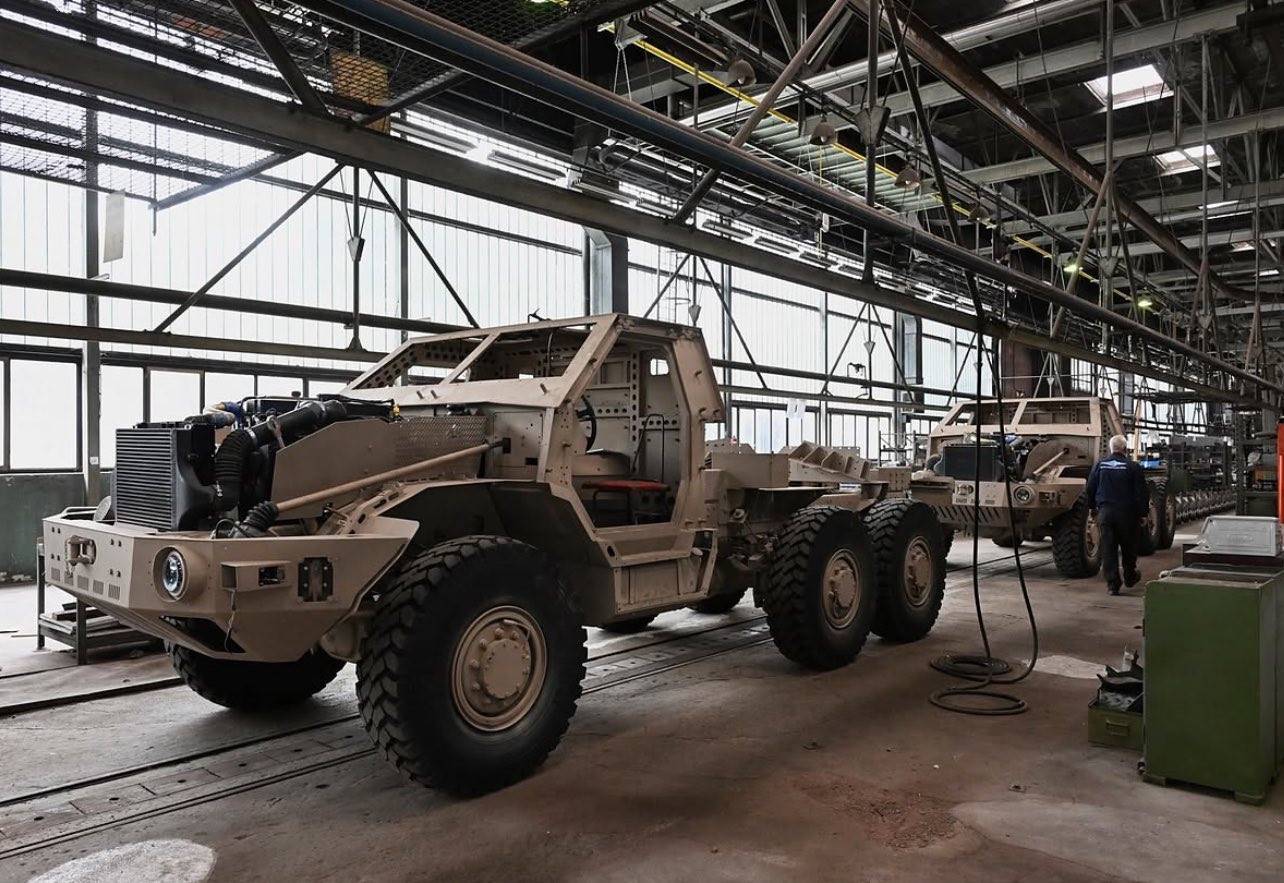
FAP is no ordinary factory. In August the ministry signed a multi-year agreement under which it supplies the army’s trucks, off-road and armored vehicles and special platforms in 4x4, 6x6 and 8x8 configurations. The official description says what rides on top: communications systems, electronic warfare systems and unmanned aircraft. The figure given was 83 chassis.
On October 8 Gašić was at FAP in Priboj with Sinotruk’s director for Europe, Gao Changwei, touring the assembly hall. He reminded the workforce of the army contract and promised that the ministry would go on equipping its units with domestic products.
Domestic is the word to watch. No agreement between Sinotruk and FAP has been announced, and the ministry calls the cooperation potential. If the talks end where both sides say they want them to, a FAP truck will come off a line Sinotruk has upgraded, to a design Sinotruk has helped develop, with Sinotruk parts inside. It will carry a Serbian badge and a Serbian invoice. The supply chain under the badge will run to Jinan.
Sinotruk’s parent is a Chinese state company. In 2017 a United Nations panel of experts recorded trucks with its logo carrying submarine-launched ballistic missiles through Pyongyang on parade. China told the panel its export contracts required civilian use and said it could not identify the trucks in the parade. In 2024 its Sitrak brand led sales of new heavy trucks in wartime Russia, by the industry tracker Autostat’s count. Nothing is more dual-use than a truck.
A chassis is where interoperability becomes physical. The radio, the jammer and the drone launcher are bolted to it. Whoever supplies its components keeps a hand on the spare parts, the maintenance and the technical support for as long as the fleet runs. On September 29 the Chinese army’s logisticians were inside Serbia’s military logistics system, exchanging experience on transport, supply and maintenance. A Chinese state company is now negotiating its way into the factory that builds what that system drives. The United States has given this army 40 Humvees and twenty years of the Ohio Guard’s time so that it could work alongside Americans.
There is a second Chinese track, and it has a date. At the August signing Vučić asked his assistant minister, on camera, when the contract with the Chinese would be done. “In October,” came the answer. Serbian defense reporters take that to be the package with the long-range HQ-9. It is a separate matter from the trucks. Both are in the hands of a caretaker: Serbia votes on October 25, and Gašić holds office in a technical mandate.
On October 1 I asked in these pages what the Secretary meant when he said Washington would “manage” Serbia’s “potentially problematic and explosive” issues. I am still for the deal. A Serbia that wanted to be pulled away from Beijing would not spend the last weeks before an election walking a Chinese state company through its army’s truck factory. The Secretary has not said what “manage” means. Belgrade has said when.
Mark Gojcaj writes from New York, where he analyzes the intersection between American conservatism and the political and security realities of Southeast Europe. He is a regular contributor to The Kosovo Dispatch on transatlantic coverage, focusing on U.S. foreign policy, NATO dynamics, and the Western Balkans.
