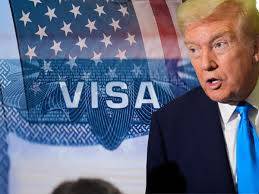
An administrative pause on immigrant visa issuance has revived one of U.S. immigration law’s oldest principles — with immediate consequences for families from Kosovo, Albania, and beyond.
By Mark Gojcaj | 15 Januar 2026
The U.S. immigration system has a habit of resurrecting its oldest rules at moments of political and institutional stress. In January 2026, one of the most enduring—and least understood—principles of American immigration law returned to the foreground: the public charge doctrine.
On January 14, the U.S. Department of State announced an indefinite pause on the issuance of immigrant visas for nationals of 75 countries, effective January 21. The measure does not stop applications, interviews, or non-immigrant travel. It halts approvals. And it does so not on security grounds, but on economics—specifically, on a renewed effort to enforce the public charge inadmissibility provision under Section 212(a)(4) of the Immigration and Nationality Act.
For applicants from Kosovo and Albania, the pause has triggered understandable concern. But the policy itself is neither novel nor politically targeted. It is an administrative recalibration rooted in a century-old legal doctrine that has always been part of the American immigration framework—and one that the second Trump administration has chosen to enforce with renewed rigor.
What Is Actually Frozen—and What Is Not
The January 2026 pause applies exclusively to immigrant visas, meaning pathways to permanent residency. Family reunification visas, employment-based green cards, and Diversity Visa (DV) lottery approvals are all affected for nationals of listed countries.
What remains untouched is equally important. Non-immigrant visas—tourist, student, business, and most temporary work categories—continue as normal. U.S. embassies and consulates are still accepting applications and conducting interviews. The system is functioning. It is the final issuance decision that is temporarily withheld.
This distinction matters because it underscores the nature of the policy: administrative restraint, not exclusion; enforcement emphasis, not a ban.
The Public Charge Doctrine: Old Law, New Emphasis
The public charge rule is not a Trump-era creation. It dates back to the late 19th century and is codified in INA §212(a)(4). Its premise is simple: the United States may deny permanent residency to individuals deemed “likely at any time to become a public charge”—that is, primarily dependent on government support for basic subsistence.
Congress reinforced this principle in 1996 through welfare reform and immigration enforcement legislation, embedding self-sufficiency as a core expectation of legal immigration. What has varied across administrations is not the law itself, but how aggressively it is enforced and how broadly “dependence” is interpreted.
Under the Biden administration, enforcement was narrowed, with public charge largely limited to cash assistance and long-term institutional care. Since late 2025, the Trump administration has reversed course, restoring broader discretion to immigration officers and expanding the range of factors considered in public charge determinations.
Age, health, education, employability, assets, household size, and financial sponsorship now carry renewed weight. So too does the likelihood—explicitly emphasized in recent guidance—that an applicant could rely on public benefits in the future.
Why Kosovo and Albania Are Included
Kosovo and Albania appear on the list not because of diplomatic disputes, security concerns, or political signaling. They are included alongside a wide range of countries across Eastern Europe, Africa, Asia, and Latin America based on statistical and economic indicators tied to public charge risk assessments.
Crucially, neither Kosovo nor Albania appears on the separate list of countries subject to security-based visa restrictions under Presidential Proclamation 10998. That distinction alone undermines claims of political targeting.
This is an uncomfortable truth, but an important one: inclusion reflects administrative categorization, not geopolitical judgment. Allies and adversaries are treated alike under this framework. The policy is blunt, arguably overbroad, but not selective.
Who Bears the Real Cost
The consequences, however, are real—and unevenly distributed.
Family-based applicants are hit hardest, particularly parents, spouses, and adult children whose cases depend on lengthy processing timelines. Diversity Visa winners from affected countries face acute risk, as DV approvals are bound by strict fiscal-year deadlines. Employers sponsoring permanent residency may see critical hires delayed indefinitely.
None of this cancels eligibility. But delay, in immigration law, is often indistinguishable from denial.
What This Signals About U.S. Immigration Governance
The pause reflects a broader shift in how the United States is managing legal immigration under Trump’s second term. Rather than sweeping statutory changes, the administration is relying on administrative enforcement, discretion, and procedural control to shape outcomes.
This approach is quieter than headline-grabbing bans, but more durable. It operates within existing law, withstands judicial scrutiny more easily, and reshapes immigration flows without requiring congressional action.
For countries like Kosovo—small, allied, and highly diaspora-dependent—the lesson is sobering. Immigration policy is no longer driven primarily by symbolic partnerships or moral narratives. It is governed by institutional logic: fiscal risk, administrative capacity, and enforcement priorities.
What Applicants Should Understand Going Forward
For now, applicants from affected countries can still apply, interview, and prepare documentation. Strong financial sponsorship, clear employment prospects, and comprehensive evidence of self-sufficiency will matter more than ever once issuance resumes.
There is no announced end date to the pause. There may be legal challenges. There may be internal adjustments. But there should be no illusions about the direction of travel.
The United States is reasserting an old principle: permanent immigration is conditional on economic self-reliance. That principle has always been there. What has changed is the willingness to enforce it, systematically and without apology.
For Kosovo and Albania, the challenge is not political exclusion—but administrative reality. Understanding that distinction is the first step toward navigating what comes next.
About the Author
Mark Gojcaj writes from New York, where he examines the intersection of American conservatism and Southeast European political and security realities. He is a regular contributor to The Kosovo Dispatch’s transatlantic coverage, with a focus on U.S. foreign policy, NATO dynamics, and the Western Balkans.
