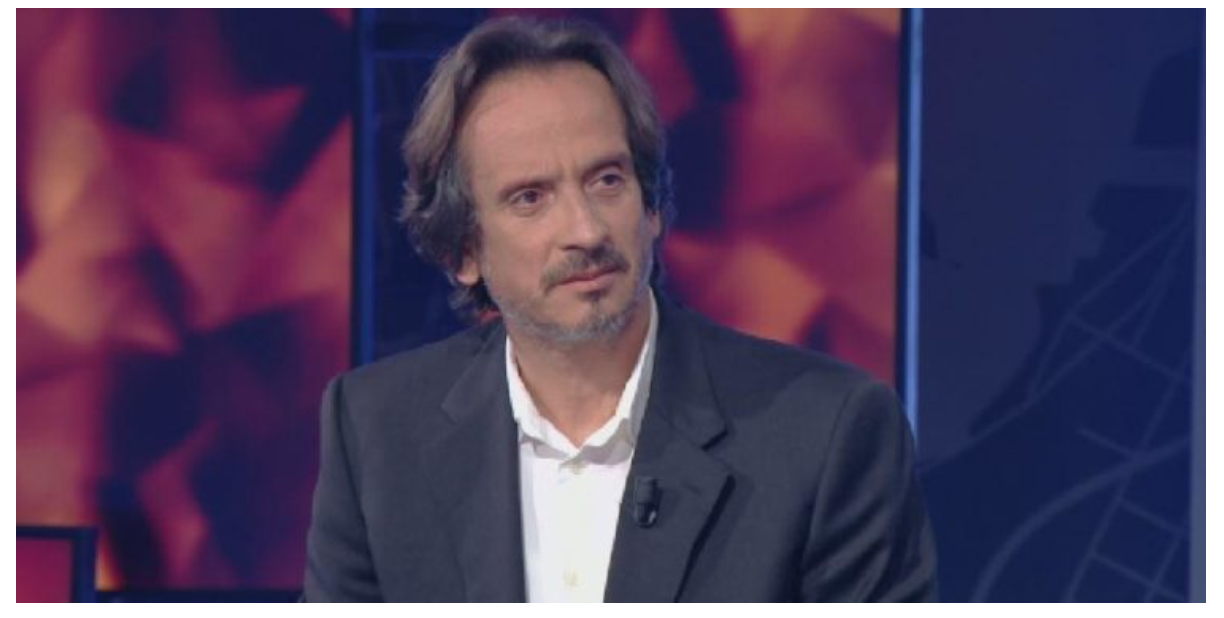
By The Kosovo Dispatch | Prishtina Bureau - 8 December 2025
Edited and introduced by Prof. Kadri Kryeziu
Across the shifting landscape of the Balkans, words have often carried both truth and denial. Few Albanian writers have moved through these tensions as gracefully as Ben Andoni — journalist, translator, and witness to three decades of political and cultural transformation. From newsroom to classroom, from Tirana’s media debates to Belgrade’s literary circles, Andoni has tried to build something rare: understanding without illusion.
In this conversation, we speak with him about how history, politics, and translation continue to shape the uneasy triangle between Albania, Serbia, and Kosovo — and what kind of honesty might still be possible in a region tired of both guilt and innocence.
I. The Region’s Unfinished Reckoning
More than thirty years after the wars, the Balkans still live between denial and fatigue. From your view, why have neither Serbia nor Albania managed a genuine moral reckoning — and how does Kosovo’s status keep that gap open?
Andoni: For those who know both countries well, the answer is not particularly complicated. Serbs and Albanians still know very little about one another, and the narratives produced by academic circles have never led to solid points of truth from which each side could begin to address their historical disagreements.
A serious attempt was made at the First Congress of Illyrian Studies (1970s) held in Tirana, where Serbian historians participated and publicly acknowledged the advancement of Albanian historiography concerning antiquity. But it stopped there. Meanwhile, through their school textbooks and public narratives, Serbs remain convinced that Albanians arrived late to their current lands — in the 11th century. Paradoxically, we had our first state formation, the Principality of Arbër, in the 12th century — a fact that does not seem to make an impression on Serbs.
Albanians, for their part, still claim lands up to Niš, relying on references from the Ottoman period, despite the fact that a large part of the population there was indeed Albanian. Likewise, there is a confusing national narrative about territorial shifts in northern Kosovo during Tito’s Yugoslav administrative reforms, as well as the romanticized map of ‘Natural Albania,’ which has lost traction due to lack of support among Albanians.
But it is clear: the key problem between us remains Kosovo — and everything related to its status, especially after the Second World War. Even today, it is unclear in Albania why Kosovo remained part of Yugoslavia and whether the communist government relinquished what the fascist occupying forces had legally designated as part of ‘Greater Albania.’
In my view, Serbia and Albania do not truly wish to know each other in depth — not because individuals from both sides have not attempted to do so, but because our anthropological divides are significant. Any constructive act is dwarfed by the false hatred and the perpetual search for an enemy that exists on both sides. Our problem appears to be more anthropological than political. Kosovo’s case has made it nearly impossible for either side — especially as Prishtina’s official stature grows — to adhere to their traditional historical paradigms.
Belgrade continues to instrumentalize Kosovo, while Tirana often seeks pragmatic calm. Do you see Albania’s current diplomacy as a bridge toward reconciliation, or as a quiet form of avoidance?
Andoni: Diplomatic Tirana is political Tirana — because it speaks politically, not diplomatically. Our officials are often unclear about the region’s prospects, uncertain about the fluid narratives of the time, and especially vulnerable to the chameleon-like behavior of Serbian officials.
More importantly, our diplomacy lacks substance. It should have drawn lessons from history regarding Kosovo, yet it has not. This makes the Albania–Serbia relationship highly unstable. Tirana’s positions largely follow Brussels and Washington, not historical logic. Albanian officials are more interested in receiving praise from foreigners and being considered reliable interlocutors than in presenting themselves as patriots or sovereignists. The latter is used only for domestic electoral consumption.
Today’s Albanian diplomacy has no defined core, except for the slogans of ‘strategic alliances.’ As a result, it repeats and articulates even Brussels’ mistakes regarding Kosovo, behaving as if we were already an integrated EU state (we are still only in the process), and not as the mother-state with significant responsibilities.
Kosovo’s independence was meant to close a chapter; instead, it reopened competing myths. What binds Serbia so emotionally to Kosovo — politics, faith, or a deeper wound of identity?
Andoni: We cannot deny — nor should we pretend — that Kosovo’s territory and heritage do not matter to Serbia. Not only do they matter greatly, but they fuel the medieval myth of the ‘Battle of Kosovo’ (1389), which, despite being a catastrophic Ottoman victory, displayed the Balkan spirit of sacrifice under Prince Lazar (whose mother is said to have been Albanian). It is central to Serbian nationalism.
As Kadare has written: ‘The Balkans went to bed in Europe and awoke in Asia.’
In the 13th and 14th centuries, Kosovo was the political, cultural, and religious core of the Medieval Serbian Kingdom. Serbia’s weight in the Byzantine Balkans was significant before the Ottomans arrived.
We must also remember the religious and architectural heritage — monasteries and Orthodox churches, many of them centuries old and considered sacred. The Patriarchate of Peja, Visoki Dečani, and the Gračanica monasteries are UNESCO-linked and represent the soul of the Serbian Orthodox Church. The Serbian patriarch must be consecrated in Kosovo according to canonical rules.
What Serbs rarely admit is that Albanian princes also participated in the Battle of Kosovo — including Skanderbeg’s grandfather and Teodor Muzaka. Nor do they emphasize that many religious sites were built over pre-Christian structures belonging to a people who lived there before the Serbs — Albanians by any objective logic.
Meanwhile, we Albanians rarely acknowledge the major gaps in our documented history after Emperor Theodosius divided the Roman Empire in the 4th century.
Kosovo’s independence tore apart the Slavic identity fabric. It deprived Serbs of a space they themselves ravaged through decades of brutality toward Kosovo’s population and colonists’ violence. They consider the loss of Kosovo a tragedy inflicted by foreigners, especially NATO, while shamelessly avoiding acknowledgment of the pogroms against Kosovo Albanians.
For Serbs, their greatest historical pride lies in the centuries when they ruled Kosovo. The new 21st-century status brought them back to earth, broke their myth, and forced them to confront a new reality — one in which they feel their ‘Metohija’ now floats somewhere in the air.
II. The Fragile Triangle: Tirana – Prishtina – Belgrade
The relationship between Albania and Kosovo oscillates between affection and distrust. What lies behind this rhythm — generational differences, political interests, or fear of being drawn into each other’s battles?
Andoni: Albania holds a patriotic, economic, and mythical affection for Kosovo — rooted in shared wars, trade, and the fact that families and clans live on both sides of the border, creating a near-mythic sense of longing.
Albanians of Kosovo, especially after World War II, perceived Albania as a distant homeland behind an impenetrable shield — a country they could not touch. This fed the myth of Kosovo among Albanians, intensified by the lack of integration except during the fascist occupation.
Kosovars often saw Albanians from Albania as poor; Albanians often viewed Kosovars as brutally oppressed. Meanwhile, some believed in a cultural superiority of Albanians in Albania, justified by Kosovo’s lack of autonomy under Serbian authority.
The book The Kosovo Vilayet by Turkish scholar Mucize Ünlü shows that the differences between our regions were not small, stemming from the long-standing relations (and separations) among the four Albanian vilayets.
Despite all this, Albania has never stayed uninvolved in Kosovo’s affairs. The nationalist narrative on Kosovo was heavily cultivated by the communists and Enver Hoxha. Albania’s Sigurimi had an entire unit dedicated to protecting Kosovo’s leaders — alongside financial and logistical support. Before World War II, relations were multi-layered, and even communism entered Albania partly through Kosovar emissaries.
Still, we must admit: despite sharing the same national DNA, the ‘mutations’ our two societies underwent have distanced us from one another.
Tirana’s diplomacy often favors caution; Prishtina speaks more assertively. In your experience, where should a small nation draw the line between principle and pragmatism?
Andoni: If the diplomacy of Tirana and Prishtina had principles, they would have set Red Lines regarding not only current issues but also future ones threatening our national interests. We lack Red Lines because our political polarization is dangerously high — in both countries.
In 2025, Kosovo’s political interests prevailed over national interests, even though the narrative was wrapped in democratic language.
Tirana speaks continually of caution because it knows Kosovo rarely listens — given Albania’s limited geopolitical weight. Still, Tirana has tried. Albania’s MFA had an official unit dedicated to Kosovo’s accession to the Council of Europe, which was largely ignored. Tirana worked hard for Kosovo’s UNESCO bid, but Kosovo remained distant and did not contribute sufficiently. Foreign Minister Donika Gërvalla has often been harsh toward Tirana, echoing Vetëvendosje more than the principles of Kosovo’s diplomacy.
In simple terms:
the dividing line between principle and pragmatism should be the long-term survival of the Albanian people.
Preserving the nation above political games.
Poor governance has caused massive emigration, leading Albanians to abandon both Kosovo and Albania — something even the harshest conquerors could not achieve.
When Serbian intellectuals speak of “normalization,” it often sounds like benevolence, not equality. Is there still space for a cultural conversation rooted in mutual respect rather than hierarchy?
Andoni: There are different cultural strata among Serbian intellectuals. Some accept the reality of an independent Kosovo; others incorporate Kosovo deeply into their identity; some speak one way to local media, another way to international media, and hold a third opinion privately. Some continue remythologizing Kosovo; others hide or deny the pogrom against Albanians; others still claim Albanians are not autochthonous.
Under such conditions, normalization can only mean ‘acceptance of the situation.’ As long as NATO and the U.S. are present, we will have calm; without them, unimaginable challenges await.
What concerns me is that whenever Albania is politically shaken, Kosovo becomes shaken too. Serbs continue to view us subconsciously as a second- or third-tier people. Their ‘friendliness’ toward some Albanians often carries the tone of: ‘Ah, so you know this too!’ Yet a small group exists — positive and aware that our peoples shared much for centuries, and that our conflicts are mostly products of the last 150 years. But they are not very vocal.
We have an entire empty space that must be filled — not with respect alone, but with actual knowledge of one another. As long as clichés of the ‘bad Serb’ and ‘bad Albanian’ persist, this is impossible.
Culture has tried — literature, arts, festivals — but the reality is that Serbs remain largely indifferent to Albanian culture. Many Serbian authors are translated into Albanian; the opposite occurs rarely. Yugoslavia was the second country to publish The General of the Dead Army in 1968, and cultural diplomat Miroslav Krleža foresaw Kadare’s rise — but figures like him are rare today.
We must intensify links between universities, ministries of education, and scientific academies — especially regarding history textbooks. Albanian scholars must not hide behind nationalism but gather evidence to strengthen future dialogue.
III. Memory, Media, and Responsibility
The media landscapes of Albania, Serbia, and Kosovo have all evolved — yet distrust persists. What responsibility do journalists have in shaping or healing the memories of the 1990s?
Andoni: It is true that media landscapes have changed, and we now see more Serbian sources in Albanian print and visual media. There are region-focused talk shows that host Serbian personalities.
But apart from journalists who genuinely understand the region and pursue truth, many others simply amplify political narratives. In Albania, some media outlets promoted ‘Open Balkan’ because they aligned with the government; others reflexively opposed it because they aligned with the opposition.
Without knowledge of each other’s language, history, and anthropology, journalists cater to the crowd: Serbs as villains, Albanians as heroes or victims. In Serbia, the inverse narrative persists: eternal Serbian victims, savage Albanian nationalists.
It will take time and media maturity to overcome this. Still, some journalists at Euronews, RTSH, Top Channel, and elsewhere are crossing these barriers by learning and listening.
You have translated from Serbian and Croatian into Albanian — a linguistic and emotional crossroads. Can translation still serve as a quiet form of reconciliation when politics refuses to?
Andoni: Thank you for this question. Translation has been a cultural and aesthetic pleasure for me — a window into the artistic and intellectual worlds of the former Yugoslavia. I greatly value their literature and theoretical culture. Their themes, depth, and essayistic treatment often astonish me.
I am perhaps the Albanian translator with the most works from the Slavic languages: Serbian and Croatian, with some Bosnian. I have translated Danilo Kiš (four works), Vasko Popa (his complete works — eight volumes), Meša Selimović, Milorad Pavić, Aleksandar Tišma, Ivo Andrić’s stories, Vladislav Bajac, Dragan Velikić, Vladimir Arsenijević, Daša Drndić (two works), Ivana Brlić-Mažuranić, Saša Ilić, Dejan Atanacković, Goran Petrović, Tanja Šljiva, Luka Bekavac, Emir Pirković, Velimir Ćurgus Kazimir, Zlatko Topčić, Vladimir Pištalo, Faruk Šehić, Slobodan Snajder, Aleksandar Gatalica, Pogačar, and many others.
Some authors are well received, but reading circles remain small. Many Albanians do not read these works, or pretend to. Yet when I invite these authors to cultural festivals in Tirana, I see they are warmly welcomed for their cosmopolitan spirit and aesthetic depth.
Translation is a good path — but always prejudiced by nationalist expectations. Books translated from Serbian rarely receive awards. Critics first search for whether the author ever expressed nationalist views, rather than assessing the work. Politics, thriving on tension and public ignorance, deliberately sidesteps culture.
Many young Albanians today know Serbia through music, football, and television rather than history. Does this cultural curiosity help reconciliation, or does it risk trivializing the past?
Andoni: It is not the youth’s fault, but that of institutions — especially academic ones — which are rigid and lack platforms.
It is true that Belgrade television reached Albania through Montenegrin relay antennas. Albanians of the late 1970s and 1980s learned about international culture, and indirectly Serbian culture, through those broadcasts. They were a rare window to the world, since Italian channels were heavily restricted.
The impact of Yugoslav television was enormous — far greater than books or ideological schooling — because it showed artists, documentaries, films, and foreign cultures.
Today, Serbian culture is known somewhat through sport, far less through literature or film. A European NGO’s project for a joint history textbook failed, despite efforts from Tirana and North Macedonia; some Serbian schools accepted it experimentally, but in general young people prefer surface-level nationalist narratives.
Albanians compete over who can flash the double-eagle hand sign more aggressively; Serbs do the same with their three-finger salute. Nostalgics of Yugoslavia listen to old Serbian folk and pop simply as memories.
New Serbia is largely unknown — except through Google-translated news, often poorly translated.
Reconciliation is impossible at the scale imagined: politicians on both sides need an enemy and easily identify it in the stereotype of the ‘Albanian’ or ‘Serb.’ Even when rhetoric is calm, a single sports confrontation reignites the machinery of hatred.
Translation tries its best, but the environment is far from friendly.
IV. Beyond the Present Moment
When you look at today’s Balkans — weary, divided, yet still intertwined — what gives you hope that truth might one day matter more than narrative, and that the Albanian–Serbian relationship could grow into something more human than grievance?
Andoni: With the level of hatred, confusion, and political manipulation we have, I doubt that our generation — those in our 50s and 60s — will see it. What worries me is that even young people, who do not know the roots of the Albanian-Serbian conflict, harbor the same hostility as their parents and grandparents, despite cheering for Serbian athletes playing abroad.
It is absurd that when the Serbian and Albanian national football teams play against each other, they require near-military escorts.
Our narratives are built on myths and falsehoods. In a region overflowing with legends, such untruths survive for generations.
Our Academies of Science cannot resolve the historical clarifications needed, but there is one hope: the economy, and perhaps the changed mentality of future generations who may trust pragmatism and shared existence within the European Union — if the EU project survives.
I hope for common markets, gestures of mutual recognition, memorial services in Serbian churches for massacred Albanian Kosovars, and national days of forgiveness; and vice versa, respect for Serbian saints in our churches. Some of this has already begun.
We can learn from one another in agriculture, economy, industry, tourism, science, sports, and culture. Culture alone cannot achieve reconciliation if people are not calm, cooperative, and willing to improve their lives and celebrate each other’s successes.
Business has already begun quietly, but results are hidden due to the false nationalist narratives that dominate our region.
