Robert Fico promised Belgrade and Moscow. Forty-two Slovak soldiers guard Leposavić. A question for KFOR’s new commander.
the Editorial Board | 18 October 2026
General Vergori, you took command on 14 October. Two days later Robert Fico, prime minister of Slovakia, whose soldiers serve under you, stood on a campaign stage in Novi Sad, at a rally of the “Aleksandar Vučić – United Serbia” list, and spoke in Serbian. “Slovakia will continue to respect the territorial integrity of Serbia. I repeat, when it comes to Kosovo and Metohija, we will never let you down” (“Slovačka će nastaviti da poštuje teritorijalni integritet Srbije. Ponoviću, kada je reč o Kosovu i Metohiji, nikada vas nećemo izneveriti”). He added that no pressure could move him. The pressure he had in mind sits in Brussels and in your own headquarters.
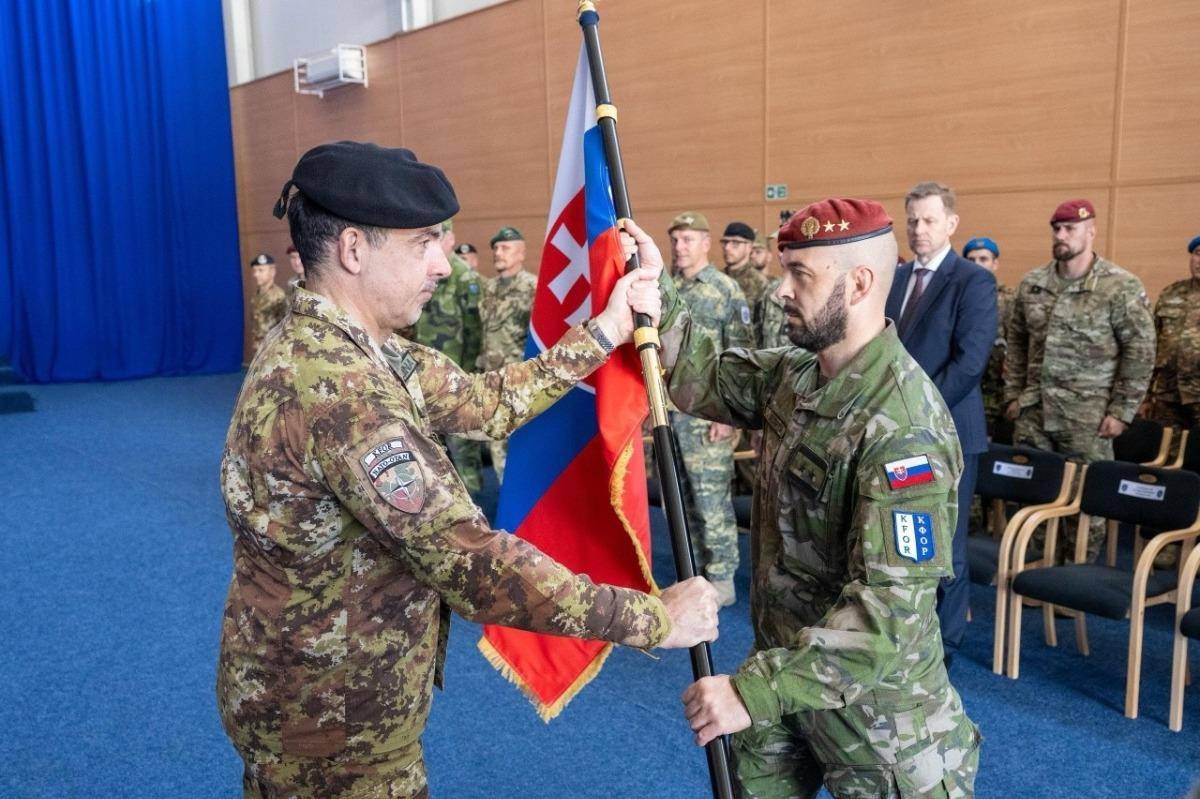
Forty-two Slovak soldiers serve under you. Twenty-seven of them are special forces. They run force protection at Camp Nothing Hill outside Leposavić and the national support element at Film City in Pristina, on a rotation that ends in November. This publication has no quarrel with those soldiers. Forty-two of their predecessors died in January 2006 flying home from this mission, and their names are at your headquarters.
In May Fico sat in the Kremlin, the only EU head of government there for Victory Day, and told Vladimir Putin on camera that Slovakia had taken concrete steps to bring back military attachés at the two embassies. On 8 October Bratislava delivered: a brigadier general and a colonel posted to Moscow, a Russian officer expected in Bratislava, the first exchange of military attachés between the two capitals since 2022. The last Russian deputy military attaché in Bratislava was filmed recruiting a Slovak to pass information on NATO and the EU, and expelled in March 2022. Defence minister Robert Kaliňák says the idea was Bratislava’s own and that Russia is not a threat to Slovakia.
In September Fico said in Prešov that Slovakia would not be drawn into a conflict “because of some Article 5”, and spent a weekend arguing the point with Czech President Petr Pavel. Your mission runs under Resolution 1244 and under your chain of command, and a Slovak soldier at Nothing Hill answers to you whatever his prime minister thinks of Article 5. But every contingent in KFOR arrives with a national line home and with restrictions its government may place on its use. NATO calls them national caveats. They are declared in writing in the force-generation process, and the commander is expected to know them.
The north is where Serbia tests KFOR, as it did at Banjska in September 2023 and in the pressure around Leposavić since. The men at Nothing Hill see the force posture there, the patrol rhythm, the readiness. Whatever they report home, and under whatever safeguards, goes to a national defence ministry that has just restored its military representation in Moscow, under a prime minister who has pledged to a Vučić rally that Serbia can count on him. You inherited that structure on your second day.
Has Bratislava declared any caveats on the Slovak contingent’s employment in the north, General, and what do they say? What operational information about the north does the contingent hold, and what governs how it is handled and reported? Have you asked Bratislava what its restored military line to Moscow means for the officers it has under your command? And if the answers do not satisfy you, will you recommend to Joint Force Command Naples that another nation take the slot at the same strength when the rotation ends in November?
Replace, not reduce. KFOR must not lose a single soldier in the north. Belgrade has already told its public that an Italian commander is good news for Serbs. You will answer that in your own time. The Slovak question is quicker. A prime minister who promises Belgrade he will never let it down, and Moscow that the generals can talk again, has told you what his flag means. It is for you to tell Kosovo what it means inside your fence.