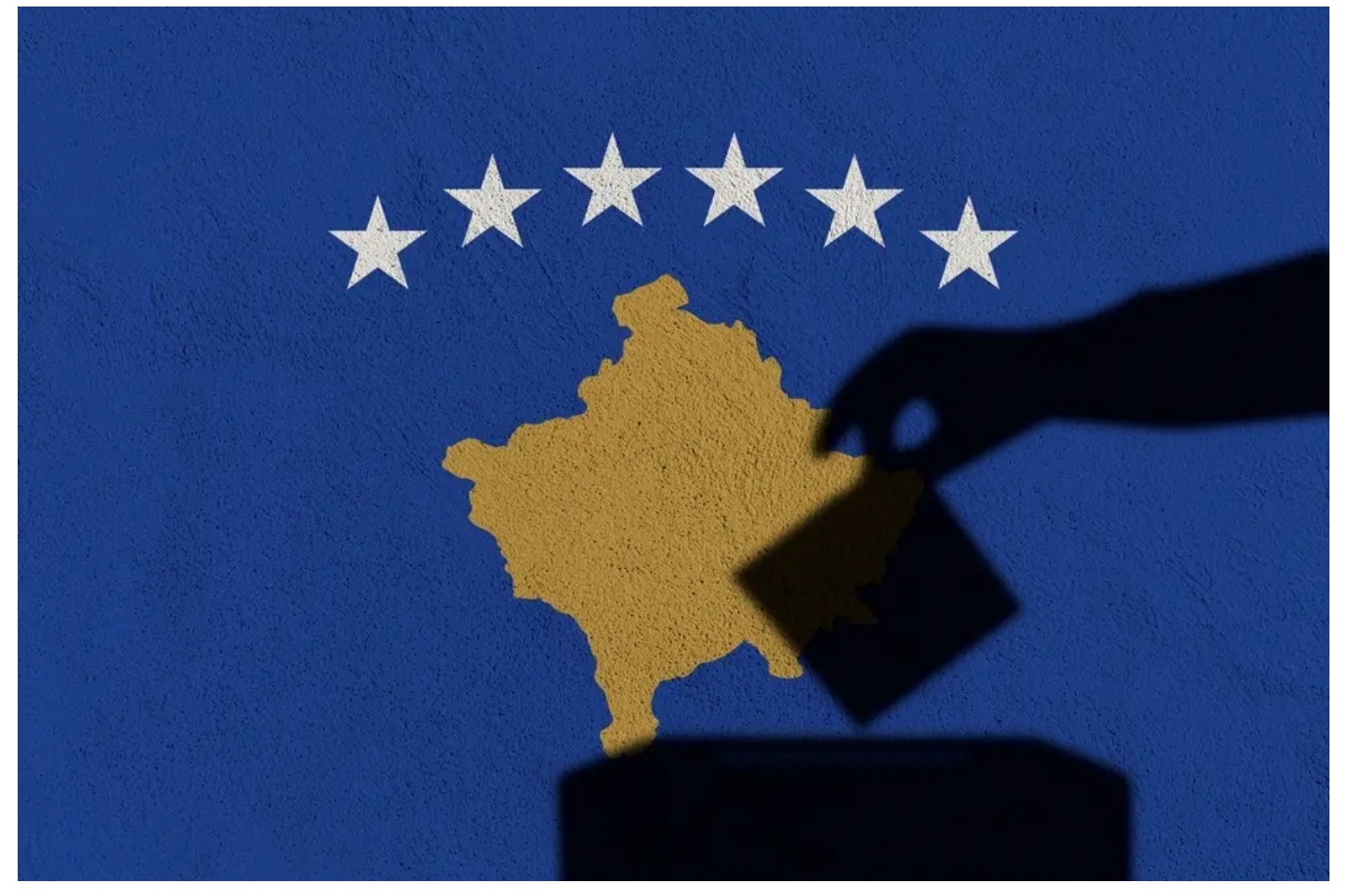
Mark Fleming’s October mission to Prishtina, carried out during the U.S. government shutdown, sent an unambiguous message: Washington is reassessing its approach to Kosovo at a critical political juncture. With snap elections scheduled for December 28, the United States has outlined its expectations for Kosovo’s political actors, the potential coalition scenarios, and the broader regional architecture Washington intends to shape in 2026.
DC Bureau – 1 December 2025
1. Introduction
Mark Fleming’s October visit to Prishtina — conducted during a U.S. federal shutdown — constituted a deliberate act of strategic signaling. The timing, content, and target audience of his meetings indicate a recalibrated U.S. approach to Kosovo’s political landscape and to the Western Balkans more broadly.
This assessment outlines the policy messages delivered by Fleming, their implications for the December 28 snap elections, and the likely institutional scenarios that could follow.
2. Strategic Intent of the Fleming Mission
2.1. Significance of the visit
The shutdown-period travel confirms that the visit was not routine. It carried specific instructions from the Trump administration regarding Kosovo’s political trajectory and the upcoming election cycle.
2.2. Key messages communicated
Based on Fleming’s engagements in Prishtina, the following policy lines were conveyed:
1. Increased U.S. strategic attention to the Western Balkans, with a stated intention to reassert American influence.
2. Prime Minister Kurti is not viewed as a reliable partner for Washington.
3. Washington prefers President Vučić to the Serbian opposition, which is not regarded as a dependable counterpart.
4. Recent U.S. interventions in Serbia’s energy policy reflect a more assertive regional approach.
5. President Trump is expected to engage personally in the Kosovo–Serbia dialogue in 2026 with the objective of reaching a durable settlement.
6. Kosovo’s opposition was advised not to enter any governing arrangement with Kurti, and to prepare to assume governing responsibility if the post-election arithmetic allows.
These messages collectively outline a coherent strategic orientation.
3. U.S. Expectations for the December 28 Elections
3.1. Assessment of electoral outcomes
U.S. policymakers maintain a realistic assessment of Kosovo’s electoral dynamics:
- LVV is expected to finish first.
- PDK is expected to finish second.
- LDK is expected to finish third.
There are no misconceptions in Washington regarding Kurti’s popularity. However, the United States differentiates between electoral strength and coalition viability.
3.2. Second mandate scenario
Washington’s working assumption is that Kurti may not secure a parliamentary majority. In such a scenario:
- The presidency of the Assembly becomes the pivotal procedural step.
- To avoid repetition of the 2025 stalemate, PDK and LDK would be expected to vote for LVV’s nominee for Speaker, thereby triggering constitutional timelines.
- LVV retains the theoretical ability to delay the process by refusing to nominate a Speaker candidate, although this would likely generate institutional confrontation and draw external scrutiny.
- Should the process become obstructed, the Constitutional Court would once again be required to arbitrate, as in previous cycles.
3.3. Positioning of Bedri Hamza
The decision to grant Bedri Hamza an audience with senior U.S. officials responsible for Kosovo is widely interpreted as a de facto signal that he is considered the most credible alternative for forming a government in the event of a failed Kurti mandate.
This aligns with U.S. preferences for stability, predictability, and government partners amenable to structured dialogue.
4. LDK’s Strategic Calculus
4.1. Demand for parity of access
LDK maintains the position that its chairman, Lumir Abdixhiku, should also receive high-level engagement in Washington, particularly if LDK were to place second.
4.2. Conditionality of LDK support
LDK’s potential support for Hamza in a second mandate attempt is not automatic. Internal considerations include:
- Assessing whether a non-LVV coalition could be stable.
- Evaluating whether such a coalition could elect the next President of Kosovo.
- Determining whether sending Kurti into opposition for a marginal deficit in seats is strategically advantageous.
- Addressing their own unresolved question: why support Hamza in 2026 after declining to do so in 2025?
This reflects institutional caution rather than outright resistance.
5. External Signaling and Democratic Constraints
5.1. Limits of diplomatic influence
International actors can articulate preferences and shape incentives, but they do not determine electoral outcomes. Kosovo’s leadership emerges from its electorate, not from diplomatic preferences.
5.2. Required balance
Effective engagement requires:
- Pursuing U.S. and EU strategic interests in regional stability and settlement processes.
- Maintaining respect for procedural legitimacy and public sovereignty.
Failure to maintain this balance risks reducing Western influence, not strengthening it.
6. Conclusion
The Fleming visit represents a structured U.S. effort to shape the post-election environment in Kosovo and to prepare the conditions for intensified diplomatic activity in 2026. The December 28 elections will be decisive in determining whether Kosovo enters the next phase with:
- a functional governing majority,
- a stable partner for Washington, and
- the institutional capacity to engage in a U.S.-driven final settlement process.
Washington signals openness to an alternative government if Kurti fails to secure a majority, with Bedri Hamza positioned as the preferred partner under such conditions. However, the final outcome remains subject to Kosovo’s voters and constitutional processes.