Milorad Arlov complains that in six years no one in Kosovo ever gave him an official answer. Here is one.
The Editorial Board | 19 August 2026
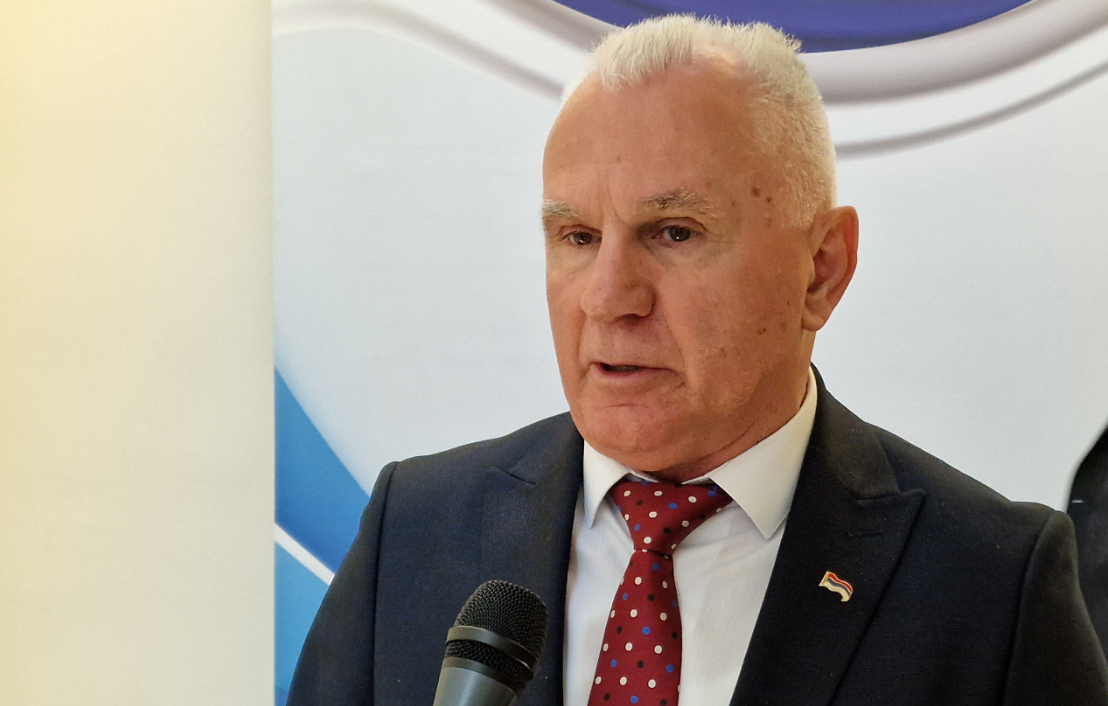
On Wednesday, the feast of the Transfiguration, Milorad Arlov sent Prelluzhë (Prilužje) a greeting instead of a visit. The president of the Banja Luka Committee for Assistance to Kosovo regretted that he could not join the village slava beneath Gazimestan, wished the winegrowers full barrels, saluted the schoolchildren his organization hosted in Republika Srpska this year, and explained his absence. A message had reached him, he said, from, in his words, Prishtina. An unofficial one, "because an official one never existed." Its content, as he relayed it through TV Most and the Belgrade-based Kosovo Online: he is not welcome in Kosovo, because he comes from Republika Srpska, leads a humanitarian organization, and allegedly cooperates with Russia.
He is right about one thing. Six years of files deserve a plain sentence, and no one has given him the courtesy of one. We hold no office and guard no crossing, so what follows binds nobody. It is simply the sentence somebody should have written long ago.
No, Mr Arlov. You are not welcome.
Not for the reasons you have chosen to relay. The message you quote has one source in the public record, and that source is you. The written refusals you yourself described in 2023 said your entry would disturb the international diplomatic, security and health situation. The Russia clause enters the record on 19 August 2026, from your mouth, in the same statement in which you rebut it: "I am sorry that this fabrication about cooperation with Russia is not true. Until now I have never cooperated with Russia, but from now on I will strive to establish that cooperation as well." ("Do sad nisam nikad sarađivao sa Rusijom, ali od sad ću nastojati uspostaviti i tu saradnju.") We have read many answers to a security assessment. We had not yet read one that promises to become true out of spite. Whoever keeps your file may simply attach your statement to it. The file now writes itself.
But your file is the smaller ledger. The larger one is the border you crossed to reach the microphone.
Since a 2012 decision of Bosnia and Herzegovina's Council of Ministers, a citizen of Kosovo cannot enter your country as a tourist. He may apply for a visa issued "only in exceptional cases," on a separate form, at three embassies, none of them in Kosovo: Skopje, Podgorica, Belgrade. Each one requires the signature of the foreign minister personally. Roughly one applicant in three succeeds, by the count of the Regional Cooperation Council's secretary general. One family measured the regime in a single answer from your Service for Foreigners' Affairs: the visa comes in cases of grave illness or death. The brother applying from Kosovo had been refused, again and again, across nine years. That is the regime your state enacted and your entity alone keeps in force. In Berlin, in the autumn of 2022, all six Western Balkan governments, yours included, signed the agreement on free movement with identity cards. Kosovo was the first in the region to ratify it in parliament. Republika Srpska has blocked it ever since, and you, honored guest of its ministries, its telecom, its mayors, have not been heard objecting to the wall built in your name. You object only to standing in front of one.
Kosovo answered that wall in a manner you may find unfamiliar. It stopped waiting. Since 1 January 2025, any holder of a Bosnia and Herzegovina identity card enters Kosovo freely; the first group crossed just past midnight and was met at the border by a deputy prime minister. No treaty obliged this. A full year on, Sarajevo has offered nothing in return: yours remains the only state in the region a Kosovar cannot enter freely, though he crosses into North Macedonia, Montenegro, Albania and Serbia itself on an identity card alone. Your neighbors in Gradiška have driven to Prishtina, Peja and Prizren for twenty months on a plastic card, through the generosity of a state their entity will not allow them to name. So let us be precise about who is unwelcome. Not Republika Srpska; its residents cross every day, unquestioned. You.
And here we must concede a point of principle, because it is real. We do not like unexplained bans. A state confident in its reasons should publish them, and six years of silence is the habit of the governments you admire, not the standard we hold ours to. But walk the concession to its end. Your lawyer files appeals to Kosovo's own commissions. You petition UNMIK, KFOR, half the embassies in Prishtina, and you are heard and counted, thirty-one times refused by your own committee's tally and each time free to say so. A Kosovar turned away at your embassy in Skopje appeals to no one. His refusal has no number because nobody is counting. Even your ban comes with more process than our passports.
One more entry, because it concerns the children you saluted on Wednesday. The border your entity keeps shut to the living and the dying opens, it turns out, on request. Yours. Bosnia and Herzegovina's Security Ministry prepared approval for more than seven hundred Serb children from Kosovo to enter with birth certificates and school booklets issued in Kosovo, accepted as documents of Serbia, for the very project whose alumni you greeted in Prelluzhë. In another round the Council of Ministers approved 461 at a stroke. We do not begrudge those children a summer. We note only what the two decisions say when laid side by side. Your state's border opens and closes on ethnicity, and you have never once called that an injustice, because it has never once inconvenienced you.
You styled yourself, in Wednesday's greeting, honorary citizen of the "Kosovsko-mitrovački okrug," a district that exists in Serbia's administrative law and on no map of the state whose border you keep petitioning. Honored by the parallel structure, aggrieved at the republic. That is the whole biography in one signature.
You once counted the ban, alongside your projects, as the best indicator of your humanitarian work. Keep it, then. It is the one document you have never appealed. And take this answer home to Gradiška, since you collect official ones. Print it, frame it beside the honorary citizenship. The door you have been knocking on for six years has an answer now, on the record, in writing.
Fuck off.