Before Zelensky landed in Belgrade, Serbia had already explained the visit. It did so in Russian.
By Ngadhnjim Brovina | 9 August 2026
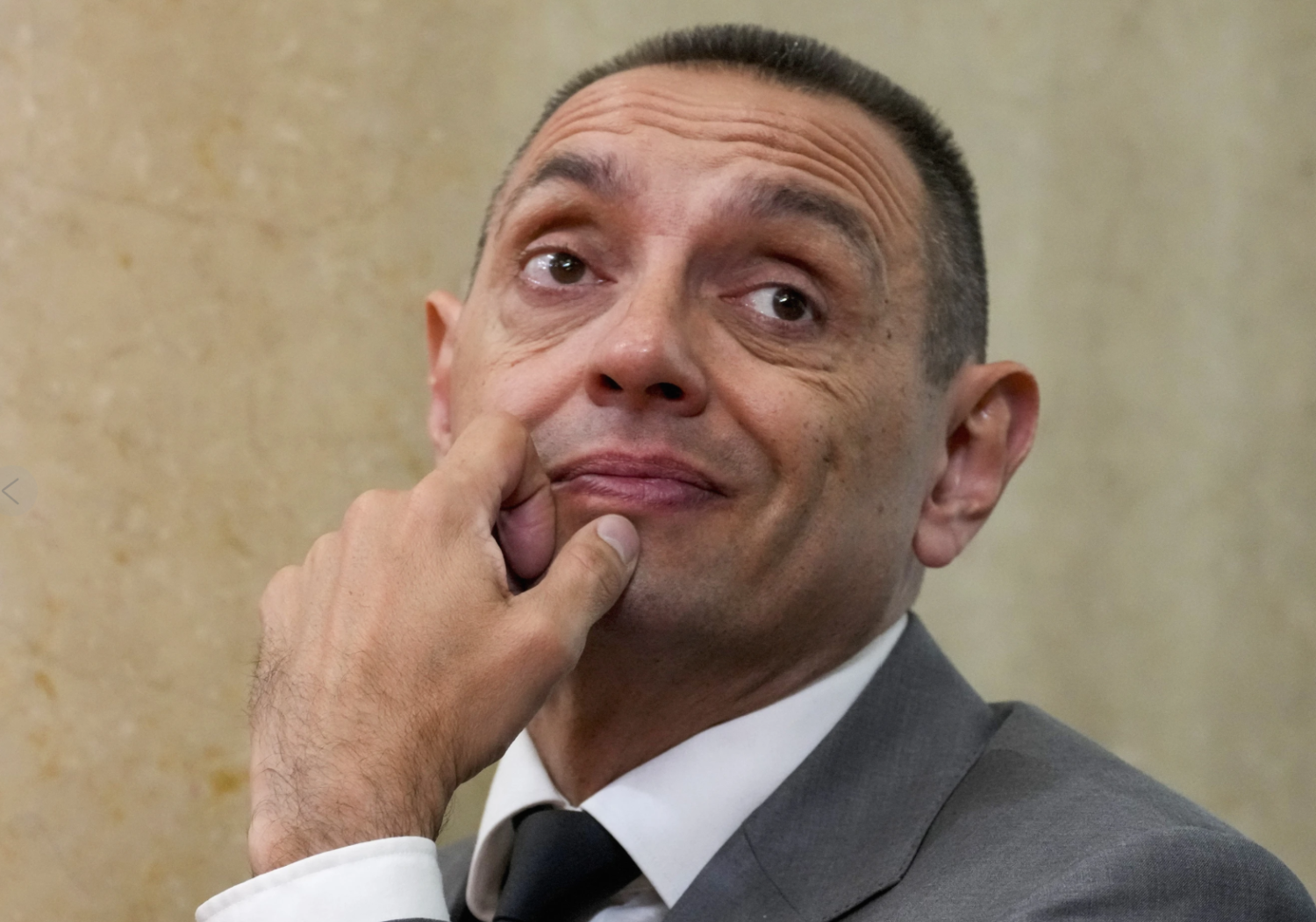
Aleksandar Vulin gave the useful interview before the diplomatic one began.
On the eve of Volodymyr Zelensky's arrival in Belgrade, Serbia's sanctioned former security chief spoke to RIA Novosti, the wire service of the Russian state. The Ukrainian president's visit, he said, was neither wanted by Serbia's citizens nor needed by its leadership. It was the product of pressure from Brussels, and punishment for the declaration Serbia's president had refused to sign in Kyiv in July. Serbia would impose no sanctions on Russia and join no anti-Russian coalition. Ukraine's refusal to recognize Kosovo did not oblige Serbia to take Ukraine's side.
Then came the sentence for which no diplomatic translation was required: not "a single bullet" would reach "the enemies of our Russian brothers."
Within hours, the official visit began.
There were flags, handshakes, a dinner and three hours behind closed doors. There was also an agricultural memorandum. Serbia's president published an account of the dinner without mentioning the war from which his guest had flown, having published his conditions for the visit two days before his guest landed. At Belegiš, the same Saturday, he supplied the measure of the relationship: Serbia is Ukraine's friend because Ukraine does not recognize Kosovo.
Vulin had explained the exchange before it happened. Ukraine's Kosovo position purchases Serbian friendship. It does not purchase Serbian alignment.
On sanctions, Vulin said nothing Serbia's president has not said himself. On Russia, he crossed no line Vučić has repudiated. On Kosovo, the president verified the premise within a day. Even the claim of European pressure sits awkwardly beside Belgrade's insistence on an entirely independent foreign policy: if Brussels can compel the president's guest list, independence has acquired an unusual definition.
Aleksandar Vulin is telling the truth.
One clause fails. Serbian ammunition worth roughly €800 million had already reached Ukraine through third countries, according to the Financial Times, and Vučić acknowledged the trade himself: "Yes, we do export our ammunition." The export halt Belgrade declared in June 2025, under visible pressure from Moscow, was porous from the start; more than three thousand tonnes flew to Israel while it was formally in force, and by this summer Serbian reporting had munitions from Krušik reaching Ukraine again through intermediaries. The bullet pledge belongs to a different genre: reassurance addressed to Moscow, which Moscow itself declines to believe.
Russia's foreign intelligence service has twice stated publicly that Serbian factories continue to supply Ukraine. When Vučić offered Serbia's ammunition stockpiles to Europe last October, the Russian foreign ministry's spokeswoman asked whether Serbia has two presidents, one speaking in Moscow and another in Brussels. Vulin tells the truth about where Serbia stands. About what Serbia ships, Belgrade misleads every audience equally.
He does not secretly control Serbian foreign policy. Vučić has been unusually clear about who does. Last September, when the Frankfurter Allgemeine Zeitung asked him about Vulin, he diminished the man with some care: not a member of his party, no longer in the government, no longer a minister. The newspaper reminded him that this peripheral figure had been entrusted with Kosovo, the interior ministry, the defense ministry, the security services and the deputy premiership. Then Vučić supplied the answer that makes the rest unnecessary.
"You know very well who ultimately makes the decisions."
We do.
A political system as concentrated as Serbia's does not accidentally maintain, for years, a senior figure who tells Moscow things its president would find intolerable. Vulin remains useful because the things he says are tolerable. More than tolerable. They perform a function.
The arrangement has a pedigree. In 1994 the Belgrade magazine Duga photographed the two of them as young men in a double portrait titled "The Left and the Right Aleksandar": a Che Guevara poster on Vulin's wall, a Croatian flag captured in Bosnia on Vučić's. Vulin, twenty two, told the magazine he held convictions he did not intend to change. Thirty two years later, his usefulness is exactly that nobody has to wonder what he believes. That is what makes him legible in Moscow, whatever is said about him in German newspapers.
Serbia's foreign policy has several languages. In Brussels it speaks accession, reform and strategic choice. In Washington it speaks partnership and regional stability. At home it speaks sovereignty, neutrality and Kosovo. In Moscow, the euphemisms disappear. What Moscow receives is no truer than what Brussels receives, only unabridged.
That distinction matters because European policy toward Serbia has long depended on treating the two channels differently. Brussels is invited to dismiss the Russian version as rhetoric. Moscow audits the version addressed to Europe.
Vulin removes that convenience.
Before Zelensky's plane touched down, he had published the limits of the visit for Moscow to read. No sanctions. No coalition against Russia. No debt created by Ukraine's position on Kosovo. No conversion hidden inside the photographs.
Then Zelensky landed.
Kyiv knew Serbia's position on Kosovo was the price of the relationship; Vučić had announced it in advance. Brussels knew there would be no sanctions; Belgrade has said so for years. And Moscow had it in writing, from one of Vučić's oldest political associates, on its own wire.
Nobody lacked information.
The problem with Serbian foreign policy is no longer that Europe cannot determine what Belgrade means. Belgrade has developed a remarkably efficient method for making itself understood. When ambiguity is useful, it speaks to Brussels. When reassurance is required, it speaks to Moscow.
The truth is fully on the record.
Europe merely has to read the Russian version.