By The Kosovo Dispatch | Prishtina Bureau - 29 October 2025
Edited and introduced by Prof. Kadri Kryeziu
Twenty-five years after the war, Kosovo stands between fatigue and defiance. NATO speaks of calm skies while drones cross invisible borders. Serbia celebrates its war criminals and deepens ties with Moscow. The European Union promises membership without conviction. And across the Atlantic, Donald Trump is once again in the White House, reshaping alliances with the same unpredictability that once unmade them.
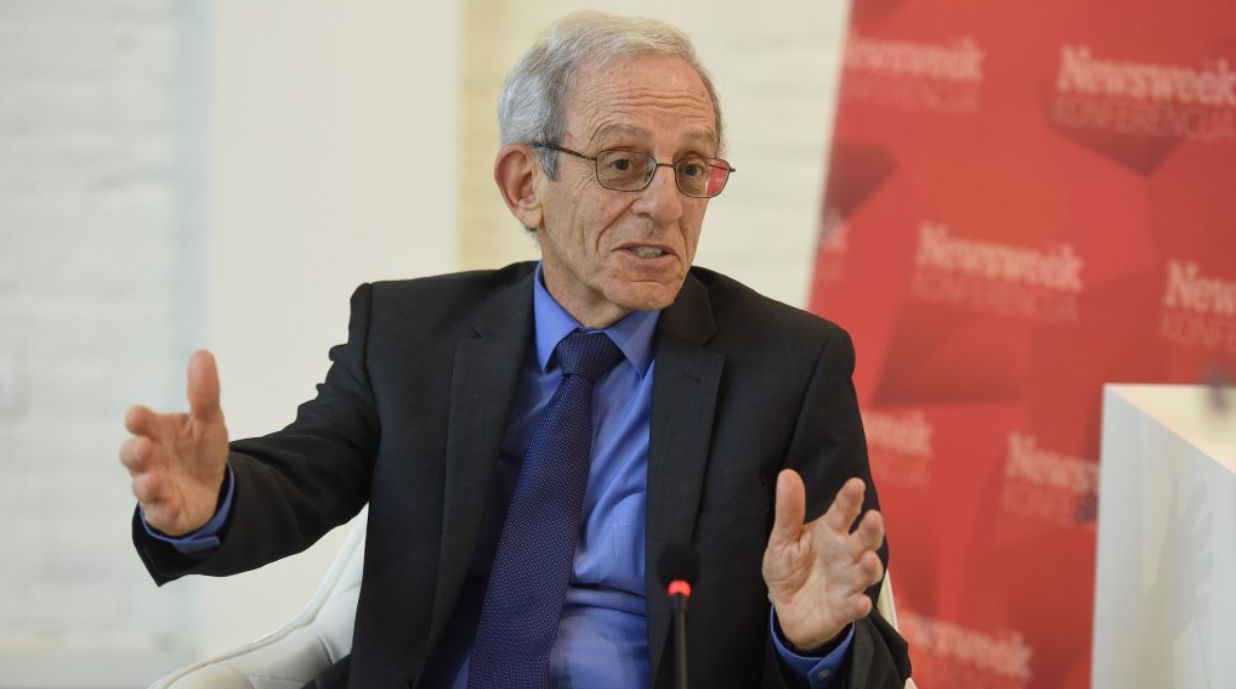
In this conversation, The Kosovo Dispatch speaks with Professor Daniel Serwer — veteran diplomat, scholar, and one of America’s most consistent voices for moral realism in the Balkans — about what the second Trump presidency could mean for Kosovo, for Europe, and for the very idea of Western credibility.
The Return of Uncertainty
Donald Trump is back in the White House. After nearly two years of foreign-policy turbulence in Ukraine, Gaza, and the Indo-Pacific, how does his return reshape the world that Kosovo lives in?
Daniel Serwer: Trump is not loyal or wise. He has repeatedly abandoned allies and sucked up to adversaries. Nor is he paying any attention to Kosovo or the Balkans. He is attached to the idea that might makes right. But he is also transactional: do for him and he might do for you.
This puts Kosovo in an awkward spot. It has little to give. It is a small country with big problems. I’m frankly surprised it is doing as well as it is — renewal of the Millennium Challenge account in exchange for zero tariffs on U.S. goods and purchase of Blackhawks that Kosovo needs. But constant vigilance will be required to ensure things don’t go sour.
America’s Role, Rewritten
Has Kosovo’s story in Washington become just another transactional file?
Daniel Serwer: I think largely the latter. Trump isn’t interested in democracy. He’s interested in what you can do for him, autocrat or democrat. People below him are largely interested in stability, not principle.
People like me remember Kosovo’s story — I was one of the advocates of aid to the Serbian opposition that brought down Milošević. We’ll try to sensitize the next generation, but that is mainly Kosovo’s job. President Osmani did a great job when she spoke at the Hudson Institute and later in Germany.
Serbia’s Balancing Act
Belgrade signs energy deals with Moscow and military agreements with Beijing while presenting itself as a reformer to Brussels. Why do Western capitals keep indulging this double game?
Daniel Serwer: I don’t think many people in Brussels still see Vučić as a reformer. Belgrade has to play the game Trump’s way as well. Ammunition for Ukraine has bought a lot of credit in Washington, as has Vučić’s effort to portray himself as a factor for stability. It’s true in a perverse way — he can create a lot of instability if he wants to (or Moscow tells him to).
A Dialogue Without Trust
The EU-led dialogue was meant to bring normalization; instead, it’s become ritual without belief. What would it take to rebuild trust — not just between Kosovo and Serbia, but between Kosovo and its Western mediators?
Daniel Serwer: I don’t think trust between Kosovo and Serbia is likely with the current leadership in Belgrade. Vučić is trying to keep the door open to possible annexation of at least part of Kosovo. No government in Prishtina should normalize with that.
With Washington, the main issue has been Prishtina’s moves in the north. People there have viewed them as provocative; in fact, I think they helped stabilize the situation.
However, Prishtina still lacks a “loyal opposition” in the north — Serbs willing to deal with the government in a normal, transactional way without diktats from Belgrade.
NATO’s Silence and Kosovo’s Fear
KFOR says “there is no threat to stability,” even as Kosovo reports drone incursions. How dangerous is it when guardians of security stop hearing what people on the ground are saying?
Daniel Serwer: If there is no threat to stability, then why would anyone criticize Prishtina for the deployment of Kosovo police there? The risk of another Vučić adventure in the north is real. He has tried three times, if I’m counting right: the kidnapping of the Kosovo police, the rent-a-riot against KFOR, and the Banjska terrorist attack. He may well try again if he detects weakness.
Europe’s Half-Open Door
The EU now floats “membership without voting rights.” For Kosovo, is this an opportunity or a polite postponement?
Daniel Serwer: I won’t be surprised if the EU changes some voting rules, perhaps to the disadvantage of smaller members. Kosovo will have to live with whatever the Union decides. It will still be better in than out.
I was in Oslo last week; Norway follows most EU decisions without a vote. The benefits would still be enormous.
Stability Versus Dignity
Can a young democracy survive when its allies prefer quiet streets to accountable politics?
Daniel Serwer: A young democracy can survive when its citizens want it to — including Serbs and other minorities.
Kosovo has proven its democratic bona fides through good elections, peaceful alternation of power, and respect for the Constitutional Court. I don’t think the same applies to Serbia.
That said, I’d like less pressure on the media, including social media. Restraint and respect for opponents are vital democratic norms — lacking in Serbia and in need of improvement in Kosovo.
Justice and Amnesia
In Serbia, convicted war criminals receive state honors while Europe stays silent. What happens when memory itself becomes negotiable?
Daniel Serwer: Memory isn’t negotiable in Serbia; it’s dictated by Vučić and his regime. Europe needs to learn to speak up and use its weight more effectively.
Lessons for Small Democracies
What advice would you give Kosovo about defending sovereignty without losing moral clarity?
Daniel Serwer: Moral clarity about the past is good. Too much rigidity in the present is not. Small countries use alliances to satisfy their interests. Kosovo currently has problems with its most important ally — not only Prishtina’s fault. Washington must learn to deal with a sovereign government that doesn’t always comply.
The strategic dialogue’s suspension under a caretaker government was normal; announcing it publicly was not. I hope it resumes once a fully installed government is in place.
Looking Forward
If you could write one line of guidance for the West, what would it say?
Daniel Serwer: Set course for NATO and the EU — and hope the political gate opens once you’re fully qualified.
_________________________________
Dispatch Editorial Note:
Professor Serwer’s words reach us at a fragile moment for Kosovo. The country is waiting — for elections, for direction, for a sense that the sacrifices of the past still mean something. Our allies are tired; our adversaries are not. In Washington, loyalty has become a calculation. In Brussels, hope feels like paperwork. And in Belgrade, provocation is once again treated as strategy.
Yet through the noise, Serwer’s calm voice reminds us of something simple and essential: small nations endure not by asking to be noticed, but by showing they deserve to be trusted. Kosovo does not need to imitate the cynicism around it. It only needs to stay true to the integrity that once made it the moral exception in a weary region. Vigilance and restraint are not signs of weakness — they are the daily language of sovereignty.
The world’s tone has changed, but the meaning of our freedom has not. This is the time to speak less about who loves us and more about how we serve what we love — our institutions, our dignity, and our people.
At The Dispatch, we will keep doing what Serwer’s lesson demands: to question without fear, to defend without anger, and to remember that the survival of small democracies depends not on sympathy, but on self-respect.
