Sputnik grades the UNMIK report its best in years, then explains what it is for: proof that Kosovo should not exist.
the Editorial Board | 23 October 2026
Sputnik Srbija published its assessment of the Security Council session on Kosovo on the evening of 21 October. Its assessment comes from the diplomat Zoran Milivojević, interviewed for the piece. The headline says something is changing.
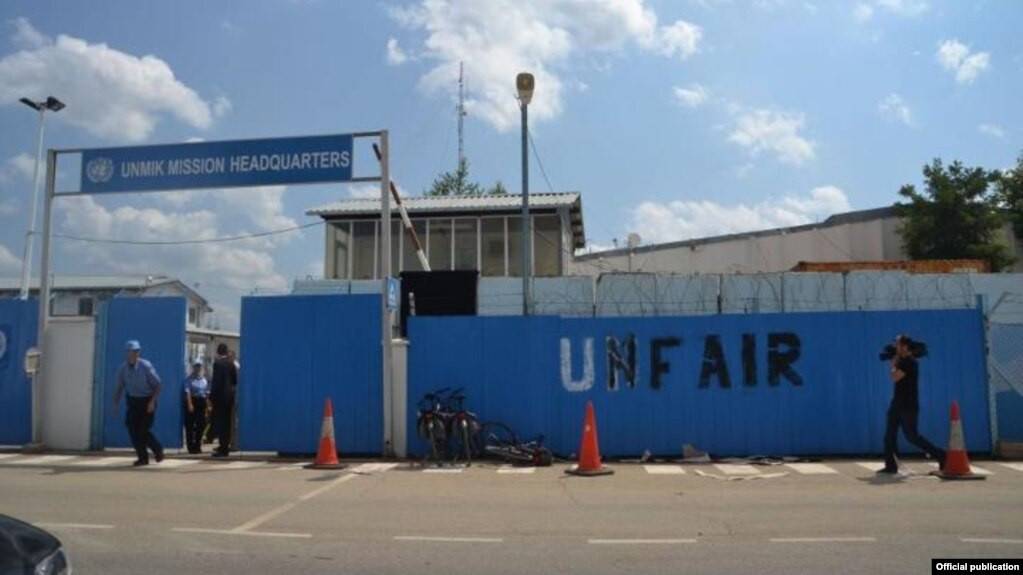
He opens with the report. The Secretary-General’s report on UNMIK, document S/2026/779, was in his words more balanced and more positive than the previous one, with a critical look at the Pristina authorities over the Specialist Chambers and over their treatment of the Serbian people. After a long time, he says, there was a critical review of the repression applied against Serbs and Serbian institutions.
The report does not use the word repression. Milivojević found it there anyway.
He then moves to the Council. Russia and China are determined that Resolution 1244 is protected to the end, that Kosovo’s status under the UN mandate is absolutely preserved, and that there is no talk of suspending UNMIK. The United States and Britain tried once more to raise suspension and did not succeed. The reactions of other participants, he adds, were weaker than before.
He closes with a programme. Serbia should insist on three things: justice equal for all, meaning Serbian victims brought into the Specialist Chambers’ frame; the preservation of 1244 and of the framework in which UNMIK and KFOR operate; and a strengthened diplomatic effort built on the argument that Kosovo’s independence is unsustainable.
The order is the argument. Serbia’s case that Kosovo is not a sustainable state needs evidence of three kinds: that the state fails its citizens, that it breaches its international obligations, and that the international community is losing patience with it. Neither Belgrade’s statements nor Moscow’s supply that evidence. The only document on UN letterhead that can be read for all three is a Secretary-General’s report that the Council received and nobody disowned. That is why the piece begins with the report and ends with unsustainability. The report is the citation. The programme is the sentence it will be cited in.
It also explains what Moscow was defending on 20 October. What the Russian delegation protects in UNMIK is its product: a text that can be placed under the heading “the United Nations on Kosovo” and read as doubt. Suspending the mission would end the citation. Russia and China will not allow it, and this week they did not have to try hard.
This publication has already set out, from the report’s own Observations, how S/2026/779 reads. The Sputnik piece shows what it is for. A report drafted in Pristina, received in New York and graded in Belgrade as the best in years is now the evidence in Serbia’s argument that the state it was written in should not exist.
UNMIK did not write that argument. It wrote the exhibit. Four days before an election, Serbian voters are being told that the United Nations is coming round, and the proof held up to them is a UN document. Whatever the mission thought it was producing in September, that is what it published.