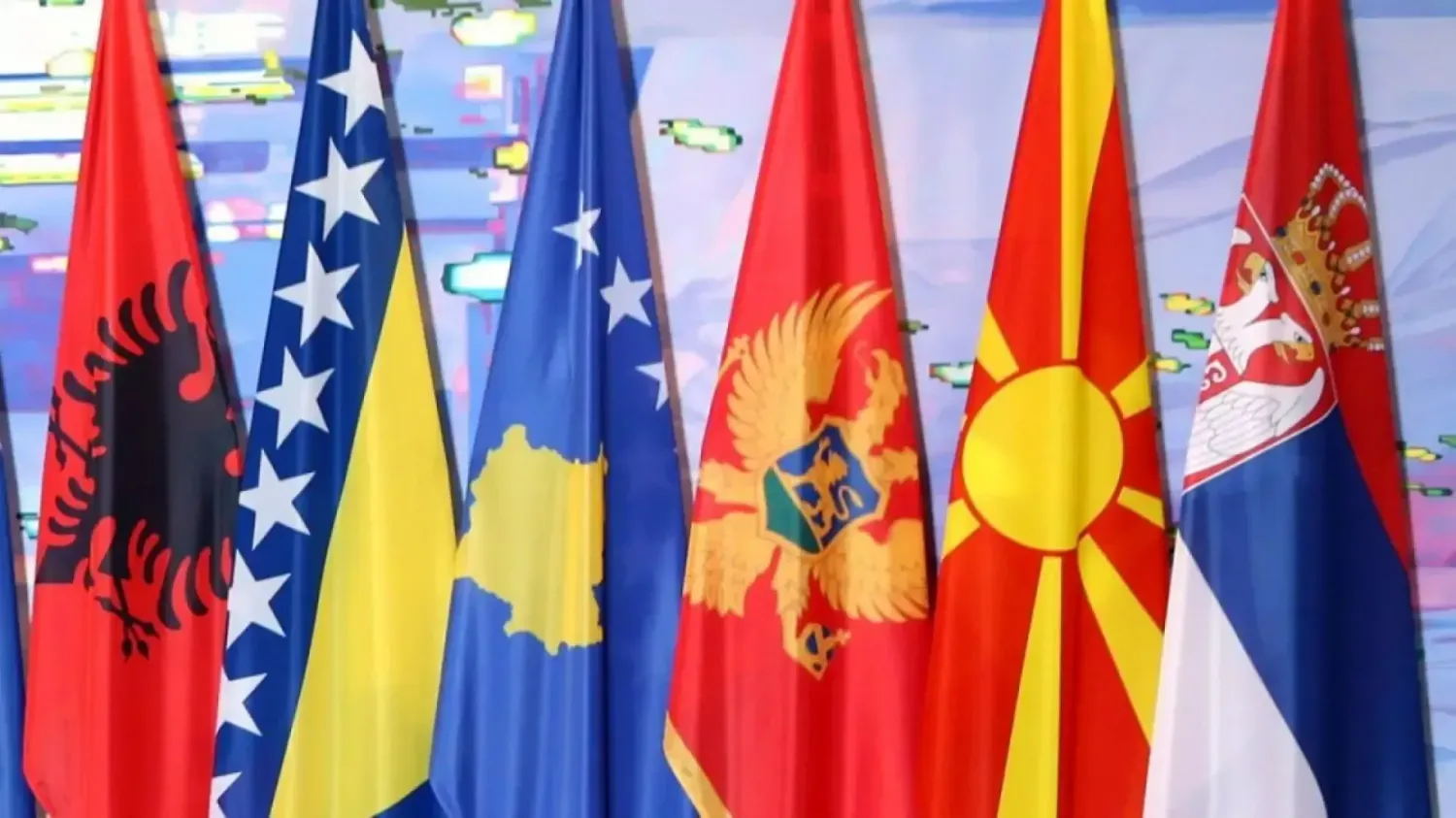
Asked in Brussels whether a new leadership in Belgrade changes anything for Kosovo, Albania’s prime minister gave the answer the Enlargement Package is due to give on Wednesday.
Kosovo Dispatch Newsroom | 4 November 2026
The European Commission publishes its Enlargement Package on Wednesday. On Tuesday, at the Euronews Enlargement Summit in Brussels, Maria Tadeo put to Edi Rama the question the Serbia chapter of that package will have to answer: does the change of leadership in Belgrade accelerate things or complicate them?
Rama turned it back first. If Euronews does not know who the Student List is, how should he; he was waiting to learn it from them. Then he said what he does know. The winners in Belgrade “have no openness” to the subject dearest to him and to Albanians, the recognition of Kosovo. “They are completely closed towards recognising Kosovo, so this means that the music in Belgrade will not change.”
Rama co-signed with Aleksandar Vučić, in February, a text in the Frankfurter Allgemeine Zeitung asking the Union to admit prepared candidates into the single market and the Schengen area without a veto, without commissioners, without seats in the European Parliament. Tadeo brought that text up before he answered. He has argued for a decade that Serbia must not be let go from the European project, and he repeated it on Tuesday: Serbia is “a very important part of the puzzle”, and losing it “would harm first and foremost our region”. He is also the man who, in Belgrade in November 2014, standing next to Vučić, said that Kosovo’s independence was a reality Serbia would have to accept, and was told at the same press conference that he had provoked his host. He has twelve years of answers from Belgrade to measure a new government against.
Tadeo offered him the line António Costa delivers at every summit: Serbia is too big to ignore, the new government must understand it has a neighbourhood to get along with. Rama declined. “I’m not going to lecture anyone. I’m the one who is being lectured.” Albania belongs to a region not yet inside the Union; “we get the lectures, we don’t lecture. This is the rule here in Brussels.” What he said next Brussels calls conditions. Serbia’s reluctance is “not just the normalisation with Kosovo”, it is the stance on Russia and on sanctions. Serbia “has to deliver and to deserve” its place “by delivering in full what is unnegotiable when it comes to the European Union”.
Later, on the Franco-German paper on staged integration, he set out his own model. Ursula von der Leyen has seven children; the Union, by his count, has seven candidates, five in the Western Balkans plus Moldova and Ukraine. She did not raise hers in the neighbourhood and call them in once they were grown; she kept them at the table and gave them more as they earned it. Helmut Kohl at the Wall did not tell East Germans they had thirty-three chapters to go through. Merit-based process, everyone at the table. And in that model he placed Serbia himself: “When someone like Serbia doesn’t want to deliver, it stays around the table, but doesn’t take anything from the table.” The chair stays, he said, so that nobody, Russia included, can tell the Serbs they will never be part of Europe.
On 25 October Friedrich Merz, Marta Kos and Ursula von der Leyen welcomed the Student List’s victory without a sentence on Kosovo; this publication reported it at the time. Rama supplied the sentence from a Euronews stage, and he supplied it as a finding about Belgrade, a city where he has been received and whose president he has written with. Euronews’s own report on the interview adds the background: the student movement, like almost every political force in Serbia, holds Kosovo to be an “inalienable part of the Republic of Serbia”. A new orchestra is playing the same score.
Serbia keeps its chair whatever it does on Kosovo. What it does on Kosovo decides what it is served. That rule works only if the people serving apply it, and they have been serving Belgrade for fifteen years on the strength of a dialogue that has not moved it one step towards recognition. On Wednesday the Commission will say in writing what it makes of Serbia’s delivery. The Albanian prime minister has already written the first sentence of that chapter. The question is whether Brussels will dare to use it.