Brussels is the enabler of the next Balkan war.
By Albatros Rexhaj | 30 August 2026
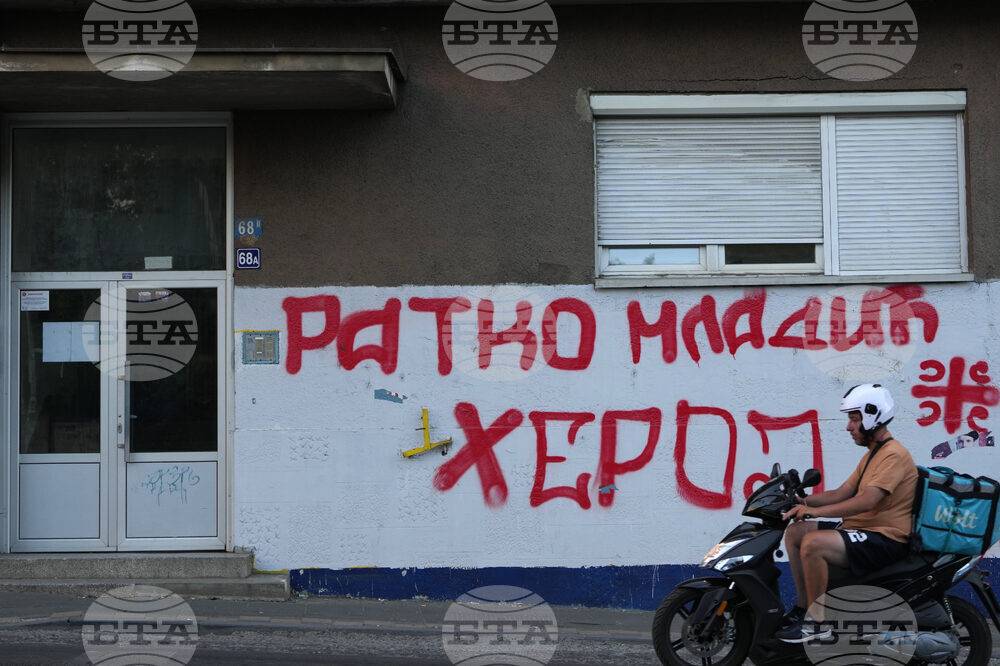
Within a day of Ratko Mladić's death, Serbia's justice minister confirmed that the man convicted of genocide will be buried with the highest state honors. "General Mladić je general," Nenad Vujić said on ATV. General Mladić is a general, and the protocols are known. In Srebrenica the parish priest rang the bells of six churches for his soul. At Piva Monastery a bishop numbered him among the great spiritual knights of the Serbian nation. Nothing was hidden, because nothing needed to be.
Vjosa Osmani, Kosovo's former president and today a member of its parliament, named the arrangement: an EU candidate country "that glorifies war criminals and celebrates their crimes," and a Brussels that "keeps rewarding it with billions of euros." She is right, and I will add what a post has no room to carry. I spent nearly three decades working inside international missions in this region. I recognize the file she is describing, and the institutional habit behind it: separate what belongs together, assign each part to a different mandate, and then insist that no single desk is responsible for the whole. Security goes in one file, enlargement in another, war crimes in a third. Each decision can then be defended on its own terms. It is the cumulative decision that nobody has to defend.
Consider what Serbia's leadership says in its own words. In 1997, a German correspondent recorded a young official named Aleksandar Vučić arguing that Serbia's answer to defeat was patience. This month in Kuršumlija, the same man, now Serbia's president, told his audience that things are changing in the world, only not fast enough. He has been waiting, by his own public account, for twenty nine years.
The waiting is armed. Serbia's military spending rose from 1.7 billion dollars in 2022 to 2.3 billion in 2024. Conscription returns this year. Rafale fighters purchased from an EU member state, Chinese air defense confirmed, an Israeli drone factory announced, and defense consultations in Beijing and Moscow within forty eight hours of each other this August. Neighbors are entitled to ask what this is for. The clergy answered before the diplomats could: the general was a knight, and his victims, a bishop assured the faithful, carried weapons too.
Now to Brussels, where Osmani aimed and where I want to press. Serbia's share of the EU's Growth Plan is 1.58 billion euros. When Belgrade passed judicial laws the Venice Commission rejected, the Commission froze payments within months. Remember that freeze, because it is the most damning fact available. It proves Brussels can tie money to conduct whenever it decides the conduct matters. Then read the Facility's conditions, as I have. Not one euro is tied to war crimes accountability. Not one to opening the archives. Not one to the families in Kosovo, Croatia, and Bosnia still searching for their disappeared, the families Osmani wrote about and Brussels budgets around. Brussels will answer that the money is for reform, that the funerals belong to another file. They do. That is the finding. State funerals for genocide convicts carry no cost anywhere in the paperwork, and no one should call that an oversight.
I am not scheduling a war, and neither is anyone in Belgrade, yet. I also decline to nominate anyone as a small Hitler. But recall how the last sequel was prepared. Interwar Germany taught itself that its army was never truly defeated and that an account remained open. The differences with Serbia are real, and I will state them whenever asked. The mechanism is indifferent to them. A society that relearns its convicts as generals and its victims as armed men does not need a schedule. Readiness is the product. The date is a detail.
So yes, Madam President. Brussels is doing something worse than misjudging Serbia. It has shown it can put a price on Serbian conduct, and it has decided which conduct stays free of charge. A judicial law can freeze the money; a state funeral for a genocide convict cannot. That is payment for the preparation, whatever the budget line says. Serbia sleeps on the mass graves of innocent civilians, as you wrote. Brussels has chosen to sleep beside it, warmed by its own money. One day it will wake. What will have been prepared by then is the only open question.
Albatros Rexhaj is an author, playwright, and analyst with a background in national security studies and nearly three decades of experience in political and security affairs.
